Tuesday, April 9, 2013

SF Giants 1970s


Now the next part of the blog about the San Francisco Giants I will be discussing the events and star players with awards for the period of the 1970’s.


The 1970’s wasn’t a great era for the Giants. They had a lot of star athletes but not too many big results. There were some no-hitters and playoff appearances here and there, but the Giants couldn’t capture the gold. Key players within the 1970’s included legends such as Bobby Bonds, Willie Mays, Willie McCovey, Gaylord Perry, Chris Speier and Jack Clark. These players collected 12 all-star appearances between them, one Comeback Player of the Year Award and three gold gloves.


In my opinion, the 1970’s was a rough era for the Giants as they really did fail to accomplish some big awards, such as an MVP and a World Series championship, something that the Giants was very used to before the 1970’s. The best player in this era would probably be Bobby Bonds. He was a sensational athlete and really was the star for the Giants within the 1970s. He was a great defensive outfielder winning three gold gloves. He was the MVP of the All Star game in 1973. He really molded well within the San Francisco Giants organization. His son, Barry became one of the top players ever in the Giants organization.  

Wednesday, March 13, 2013

SF Giants 1960's awards


I know that my previous blogs have been about the history of the SF Giants within a certain 10 year span, now I think that instead of getting too text booky like I have been doing, I am going to list different awards, hall of famers and all-stars if any within the next ten year span starting with the 1960 season.


(1960)


In the year of 1960, the Giants had one player win a Gold Glove for their performance on defense and had three all-star players. Willie Mays won a Gold Glove and the three Giants all-stars were first baseman Orlando Cepeda, outfielder Willie Mays and pitcher Mike McCormick.


(1961)

In the year of 1961, the Giants had one player win a Gold Glove for their performance on defense and had five all-star players. Willie Mays won his fifth straight Gold Glove and the five Giants all-stars were first baseman Orlando Cepeda, outfielder Willie Mays, pitcher Mike McCormick, catcher Ed Bailey and pitcher Stu Miller.


(1962)

In the year of 1962, the Giants had two players win a Gold Glove for their performance on defense and had five all-star players. Willie Mays and Jim Davenport won a Gold Glove and the five Giants all-stars were first baseman Orlando Cepeda, outfielder Willie Mays, outfielder Felipe Alou, third baseman Jim Davenport and pitcher Juan Marichal.


(1963)

In the year of 1963, the Giants had one player win a Gold Glove for their performance on defense and had five all-star players. Willie Mays won a Gold Glove again and the five Giants all-stars were catcher Ed Bailey, first baseman Orlando Cepeda, outfielder Willie Mays, first baseman Willie McCovey and pitcher Juan Marichal.


(1964)

In the year of 1964, the Giants had one player win a Gold Glove for their performance on defense, two players that were inducted into the Hall of Fame and had three all-star players. Willie Mays won a Gold Glove again, the two players inducted were shortstop Monte Ward pitcher Tim Keefe and the three Giants all-stars were first baseman Orlando Cepeda, outfielder Willie Mays, pitcher Juan Marichal and pitcher Mike McCormick.


(1965)

In the year of 1965, the Giants had one player win a Gold Glove for their performance on defense, one MVP, one Rookie of the Year and had two all-star players. Willie Mays won a Gold Glove, Willie Mays won the MVP award as baseball’s Most Valuable Player, Frank Linzy won the Rookie of the Year award as baseball’s top rookie and the two Giants all-stars were pitcher Juan Marichal and outfielder Willie Mays.


(1966)

In the year of 1966, the Giants had one player win a Gold Glove for their performance on defense and had six all-star players. Willie Mays won a Gold Glove and the six Giants all-stars were catcher Tom Haller, third baseman Jim Hart, pitcher Juan Marichal, first baseman Willie McCovey, outfielder Willie Mays and pitcher Gaylord Perry.
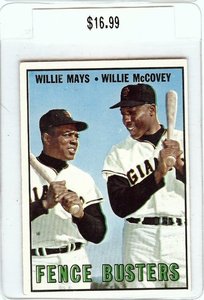


(1967)


In the year of 1967, the Giants had one player win a Gold Glove for their performance on defense, one Comeback Player of the Year and had three all-star players. Willie Mays won a Gold Glove, the Comeback Player of the Year was pitcher Mike McCormick and the three Giants all-stars were catcher Tom Haller, outfielder Willie Mays and pitcher Juan Marichal.


(1968)

In the year of 1968, the Giants had one player win a Gold Glove for their performance on defense and had three all-star players. Willie Mays won a Gold Glove and the three Giants all-stars were first baseman Willie McCovey, outfielder Willie Mays and pitcher Juan Marichal.


 (1969)

In the year of 1969, the Giants had three all-star players and one player win the MVP. Willie McCovey won the MVP award and the three Giants all-stars were first baseman Willie McCovey, outfielder Willie Mays and pitcher Juan Marichal.


The 1960’s consisted of many different awards but a lot of the similar players. Willie Mays, Willie McCovey and Juan Marichal attained most awards within the time period. Willie Mays and Willie McCovey are two huge Giant names and they are considered as two of the best players that have ever played the game. They both had bright futures the city of San Francisco will always know who Mays and McCovey are.

Saturday, March 2, 2013

SF Giants History 1950's


For the next part of my blog about the SF Giants, I will be discussing the events between 1950 and 1960, starting with the 1951 season.


(1951)

The Giants erased a 13.5 game lead by the rivaled Dodgers to win in a 3 game series for the NL pennant with one of the most memorable homeruns in Giants history as well as baseball history. The Giants win 16 straight games and 37 out of the last 44 to force a tie with the Dodgers. The 3 game series came down to game 3 and it was a dandy. It was called “The Shot Heard Around The World.” The Giants saw themselves down 4-2 in the bottom of the 9th inning. Bobby Thompson was at the plate with 2 on while Ralph Branca was the opposing pitcher. The Giants season was on the line and Thompson nailed a 3 run homerun to give the Giants the pennant! This would lead to a World Series battle with the Yankees with the Giants losing in 6 games. Hall of Famer Willie Mays made his debut in 1951 where he won the Rookie of the Year.

 
To watch the “Shot Heard Around The World,” click here.
(1954)


The Giants capture their 5th World Series Title and 1st since 1933. Willie Mays led the way with quite possibly one of the best defensive catches that baseball had ever seen.  Mays made an over the shoulder catch in Game 1 of the World Series with the game tied at 2 apiece. The Giants went onto win the game 5-2 and blow away the Indians in a 4 game sweep to capture the title. The Indians led the majors with 111 wins in the season.   


(1957)

The Giants head out to the west coast in the 1957 campaign. The Giants see a decrease in fans compared to the New York Years.  The Giants officially moves to the Bay Area for the 1958 season. This starts the San Francisco Giants era.


(1958)

The new San Francisco Giants receive a parade and great welcome at their new stadium Seals Stadium. The opener was April 15 and fans filled the stadium quickly. The Giants defeat the rival Dodgers 8-0, which made the opener that much better. The Giants defeated the Dodgers 16 of 22 times in the season, making the 75 year old rivalry awesome.

I think that the 1950’s was a great building block for the Giants. With the upcoming players they had to go along with the move to San Francisco along with a new manager and a World Title, the 1950’s was a special decade. Willie Mays today is still known as one of the best baseball players to ever play the game and it was awesome that he was a Giant. The Giants were considered “underdogs” in all of its World Championships. I think that is pretty cool that everyone doubts em yet they go out and surprise the world. It only gets better from here.
 
Video Talking About "Shot Heard Around The World" and Willie Mays.
 

SF Giants history 1940's


For the next part of my blog about the SF Giants, I will be discussing the events between 1940 and 1940, starting with the 1942 season.


(1942)


Mel Ott 1926-1947


Mel Ott takes over the reign of manager for the Giants. Ott had been a Giant for 22 years where he played right field. Ott managed while he played, where he compiled an NL best 30 home runs and 118 runs in the season. Other than this, the Giants lost many players to the military service because of the war years. Players like Harry Danning, Babe Young and Williard Marshall were all called to duty. The Giants lost 98 games in the campaign.


(1948)

The Giants made a stunning move where they hired former Dodgers manager Leo Durocher as the manger. Durocher replaced Ott as manager. Durocher stated in 1946 that “nice guys finish last.” This phrase was directed toward Ott. The new manager, over the next few years, shaped the Giants team which was built on speed and aggressiveness instead of all the power they had.


The 1940’s really didn’t prove to be so magical for the Giants as they collected no titles or championships, which was really strange since they were such a dominant team in the earlier years. It’s funny that I blog about Mel Ott, because as of today, it is Mel Ott’s birthday which is pretrty cool. I think even though no one agreed with the hiring of a Dodgers manager because of the rivalry, it turned out to be pretty good for the Giants, as their history gets better in the 1950’s.

Friday, February 22, 2013

SF Giants 1930's History


For the next part of the blog about the San Francisco Giants, I will be discussing the events between 1930 and the 1940, starting with the 1930 season.


(1930)

The Giants set a baseball record with a team .319 team average, however the Giants slump this year as they finish 5 games back in third place.


(1932)

John McGraw’s era of the manager for the Giants comes to an end. Bill Terry stepped up to manage the Giants in June.


(1933)

In his first full season as manager, Bill Terry takes the Giants to the World Series where they defeat the Washington Senators in 5 games. The Giants finished with a record of 91-61 and win the NL Pennant. Carl Hubbell anchored the Giants pitching staff and finishes as the National League MVP. The Giants were the underdogs in the World Series, as the Sens very a very high loaded team. The Giants pitchers shut the Sens down with a team ERA (Earned Run Average) of 1.53. The Giants captured its 4th World Series trophy.


1933 World Champions New York Giants


(1936)

The Giants win the National League Pennant with a 92-62 record. Carl Hubbell wins the NL MVP Award again, as he led the majors in wins and ERA. The Giants head to the World Series for another Subway Series with the New York Yankees. The Yanks get the best of the Giants and take the series in 6 games.

(1937)

The Giants once again capture another National League Pennant with a record of 95-67. Again the Yankees and Giants battle it out on the biggest stage in the World Series, and in back to back years the Giants outlast the Giants in 5 games. The Giants and Yankees battled for quite many years in the World Series.

 Within this time span, I think the Giants really proved to be a dominant and potent team. They start off not too good, but then in 1933 they win a World Championship. They also capture a few National League and division pennants. I  think coming from the 1920's, the Giants really didn't show many signs of failure. They continued to battle and fight and the rewards were great for the Giants in the 1930's. Even though I was not around to watch these Giants, I think it would have been cool to see how the Giants from these years compare and contrast to the Giants that are in the present.

For more illustrations regarding the Giants, please visit here!

Friday, February 8, 2013

SF Giant 1920's History


This part of my blog will be the years in the 1920’s.


(1921)

After several not so good years and the dismissal of 2 players along with the death of Eddie Grant, who was the 1st major leaguer killed in World War I, the Giants capture the NL pennant and finish with a record of 94 wins and 59 losses. The Giants head to the World Series this year and square off in an 8 game series against the Yankees in the 1st Subway Series. Making trades for Irish Meusel and Johnny Rawlings was essential for the Giants this year, overcoming a 7 and a half game deficit in 19 days. The Giants were featured with a roster consisting of 3rd baseman Frankie Frisch, right fielder Ross Youngs, 1st baseman George Kelly and left fielder Irish Meusel. Babe Ruth was the star for the Yankees. The Yanks jumped out to an early 2 games to none World Series lead after taking back-to-back 3-0 games. The Giants stormed back winning the next 2 easily by the scores of 13-5 and 4-2. The Yankees took a 3 games to 2 lead as “The Babe” Babe Ruth started a rally with a bunt base hit. Then the Giants took the next 3 games to capture the World Series for the 1st time since 1905. After the Series, John McGraw evicted the Yankees from the Polo Grounds which led to the building of Yankee Stadium which was built in 1923.
1921 World Series


(1922)

The Giants earn a 2nd consecutive trip to the World Series and win the NL pennant again with a record of 93 wins and 63 losses. The 1922 World Series was a rematch of the previous year, as the Giants do battle again with Babe Ruth and the Yankees. This time the Giants do not disappoint again as they defeat “The Babe” and the Yankees in a 4 victory sweep that actually took 5 games because of 1 game ending in a tie. The Giants took game 1 with a score of 3-2. Game 2 was called in a tie due to darkness. Then the Giants swept the final 3 games by the scores of 3-0, 4-3 and 5-3. The Giants’ pitchers shut down Babe Ruth over the final 3 games. The Babe did not record a hit or walk in the final games. The World Series trophy would be the 3rd and final for the Giants manager, John McGraw.


1921 & 1922 World Champions New York Giants


(1923)

Following the closing of the Polo Grounds, the Giants dynasty team heads to the World Series for the 3rd consecutive year. For the 3rd straight year, the Giants and Yankees meet up again and this time the Yanks prevail and defeat the Giants in 6 games. The Yankees this year moved into their new ballpark, Yankee Stadium. The Giants offense this year was incredible, as they became the 1st team in the 20th century to score in every inning of a game. Power houses such as George Kelly, Travis Jackson, Irish Meusel and Ross Youngs led the high powered attack for the Giants. The Giants took game 1 by a score of 5-4. The Yanks won game 2 by a score of 4-2. After the Giants won game 3 with a score of 1-0, the Yanks stromed back to win the next 3 games and took the World Series trophy.

 
(1924)

The Giants, for the 4th consecutive year, reach the World Series again but for the 2nd consecutive time; end up losing to the AL foes, the Washington Senators in 7 games. The Giants represented the NL for the 8th time in 14 years. With the World Series tied at 3 games apiece, the bad moments of Merkle, Snodgrass and Zimmerman haunted Giants fans again. Errors killed the Giants in the final game of the World Series. This trip to the World Series was the final appearance for Giants manager John McGraw. Only one other manager appeared in more World Series than McGraw; former Giant Casey Stengel.

The Giants absolutely DOMINATED in the 1920's. Even though they didn't win all the championships that they could have won, by them consistently getting to the World Series for four straight really showed their dominance in the 1920's. The Giants and Yankees really seemed to be the two dominant teams in the time span. That is an awesome accomplishment to be in the World Series for four straight years and to face the same team for three straight years. This shows the will and the passion for both teams to do what they did.

Monday, February 4, 2013

SF Giants 1910's History


My next blog of the San Francisco Giants will be the following 10 years, which was the 1910’s.

 
(1911)
The Giants led the league with a record of 347 stolen bases. They were nicknamed the “running” Giants. The Giants overcame the rebuilding of the Polo Grounds to collect 99 wins, which was good enough to earn the Giants the National League Pennant. The rebuilding of the Polo Grounds was happening because the stadium was burned to the ground in April of 1911. The Giants played their games at the park of the New York Highlanders. The Giants headed back to the World Series where it was a rematch of the 1905 series against the Philadelphia Athletics. Christy Mathewson still led the Giants pitching staff, collecting 26 wins while losing 13. Mathewson threw a 6 hitter in Game 1, where the Giants won by a score of 2-1. The Giants lost both games 2 and 3 thanks to Frank “Home Run” Baker. Baker hit 2 dramatic home runs within these games. The Giants were looking at a 3 games to 1 deficit heading into game 4 thanks to Chief Bender outpitching Mathewson. The Giants prevailed to win game 6 in extra innings. The World Series ended in 1911 in game 6 with the Giants losing 13-2 in the decisive game.

Check out the polo grounds here! 

 
(1912)
The Giants, who were leaned upon by Rube Marquard’s 19 game winning streak, lived a storybook season where they won 103 games. The Giants roll to the 2nd of 3 straight National League Pennants in 1912. Marquard finished with 26 wins, while Mathewson added 23 in the season. Larry Doyle was the MVP for the Giants, while catcher Chief Meyers hit for the cycle and Josh Devore stole 5 bases in a single game for the Giants. The Giants went back to the World Series this year, where there magic would end in the 10th inning of game 7 in the World Series. Jeff Tesreau got the nod in game 1 where the Red Sox defeated Tesreau by a score of 4-3. Game 2 was called due to darkness, making the World Series an 8 game war. The Giants evened the series collecting a 2-1 win behind the pitching arm of Marquard. The Red Sox got the better of Tesreau again in game 4 as they earned a 3-1 win. The Giants bounced back from a 2 games to 1 series deficit as they won games 6 and 7, with scores of 5-2 and 11-4. The Series came down to the last game and ended in extra innings thanks to a routine fly ball that all too reliable outfielder Fred Snodgrass dropped and cost the Giants the game and the series.   


Fred Snodgrass 1908-1915


(1913)
The Giants earned another National League title thanks to 3 20 game winning pitchers. Mathewson threw a ridiculous 68 straight innings without walking a batter. Unfortunately, the Giants once again fall short in the World Series this year. This was the 3rd straight trip to the World Series for the Giants and all 3 times ended in the same result. They lost this time to the Philadelphia Athletics again, falling 4 games to 1 in the series. Injuries haunted the Giants in the World Series as 1st baseman Fred Merkle was limited to 13 at-bats with a bad leg, center fielded Fred Snodgrass played in only 2 games and batted 3 times after sustaining a really bad charley horse and catcher Chief Meyers was sidelined after suffering a fractured finger in game 2.

 
(1917)
After 3 straight disappointing seasons, the Giants returned to the top of the National League in 1917. However, the Giants postseason flaws continued as they lost for the 4th straight time in the World Series, this time to the Chicago White Sox. The Giants fell to the White Sox in 6 games.


Polo Grounds before and after the burning of the stadium.

The Giants were on a roll in this era. They won back to back to back National Leaue pennants. For the upcoming Giants, this is kind of cool because when your trying to prove yourself in baseball, winning pennants consecutively is a great way to prove that you have what it takes to win. This timespan only leads to greater things in the next timespan. The Giants only get better from here.